How to Get Past Gatekeepers When Cold Calling US Businesses
Published on October 24, 2026

Maroosha Nageen
SEO Content Writer · LinkedIn
"Can I ask what it's regarding?" Most freelancers freeze right there. The SBA counts 36.2 million small businesses in the US. Behind many of them, one person decides who gets through. Treat that person well and doors tend to open. So how do you get past a gatekeeper when cold calling US businesses?
Callzo can't pick the lock for you (and you wouldn't want a lock-picker's reputation anyway). What we can do is show how honest calls go. You'll follow Meera, an illustrative content writer in Hyderabad who exists only on this page. Her first gatekeeper was a disaster. Her third was a friend.
Quick Answer
Treat the gatekeeper as a colleague, not an obstacle. Give your name, ask for the owner by name, state one honest reason and offer an easy alternative: a callback time or a short email. Never bluff. The gatekeeper talks to the person you want, all day. She remembers who was straight with her.
Key takeaways
- A gatekeeper is a person doing a job. Help them do it.
- Name the owner, give your name, state one true reason.
- Bluffing ("he's expecting me") is risky. The FTC's 2024 rule change covers B2B misrepresentation.
- "Send an email" can be a door. Leave with a name and an address.
- Log every gatekeeper's name and quiet hours in your notes.
Who Are US Business Gatekeepers, Really?
Meera's target is a family law office in Phoenix, picked from a Google Maps search at the start of her Monday night. She doesn't know yet who'll answer. Nobody ever does. She types the number into Callzo, takes a breath and presses call.
Who Actually Answers the Phone?
At a small firm, it could be a receptionist, an office manager, the owner's spouse or the owner (mid-bite of a sandwich). Size matters here, though the SBA's "small" stretches well past a tiny office. Smaller firms, in our experience, mean fewer layers between you and the owner.
Meera's first call reaches Gloria, brisk and kind, with a client already waiting at the desk. Her priority is plain. Don't waste the attorney's afternoon.
Why Do Gatekeepers Screen Calls?
Picture Gloria's week. Forward every pitch to Mr. Okafor and she hears about it by Friday. So she filters. That isn't hostility. It's the job. She's good at it.
Meera stops thinking of Gloria as a wall. Filters have criteria. Criteria can be met honestly. Pass the filter and Gloria may even say when he's free. She might mention what's been stressing the office lately.
Why Do Tricks Backfire?
Old-school advice says sound like an old friend. Hint you're returning a call. Could that work once? Maybe.
But the FTC's 2024 amendment to its Telemarketing Sales Rule extended the ban on material misrepresentation to B2B sales calls (effective May 16, 2024). Our guide on whether it's legal to cold call US businesses from India covers this in more depth.
A bluff stops being merely rude. It becomes a risk. Gloria also sits ten feet from the person Meera wants. She will remember.
What Do You Say to Get Through?
Honesty is the smarter play. The hard part is sounding honest without sounding nervous. Below are three moves from Meera's week. All are our suggestions, untested on live calls.
Ask for the Owner by Name
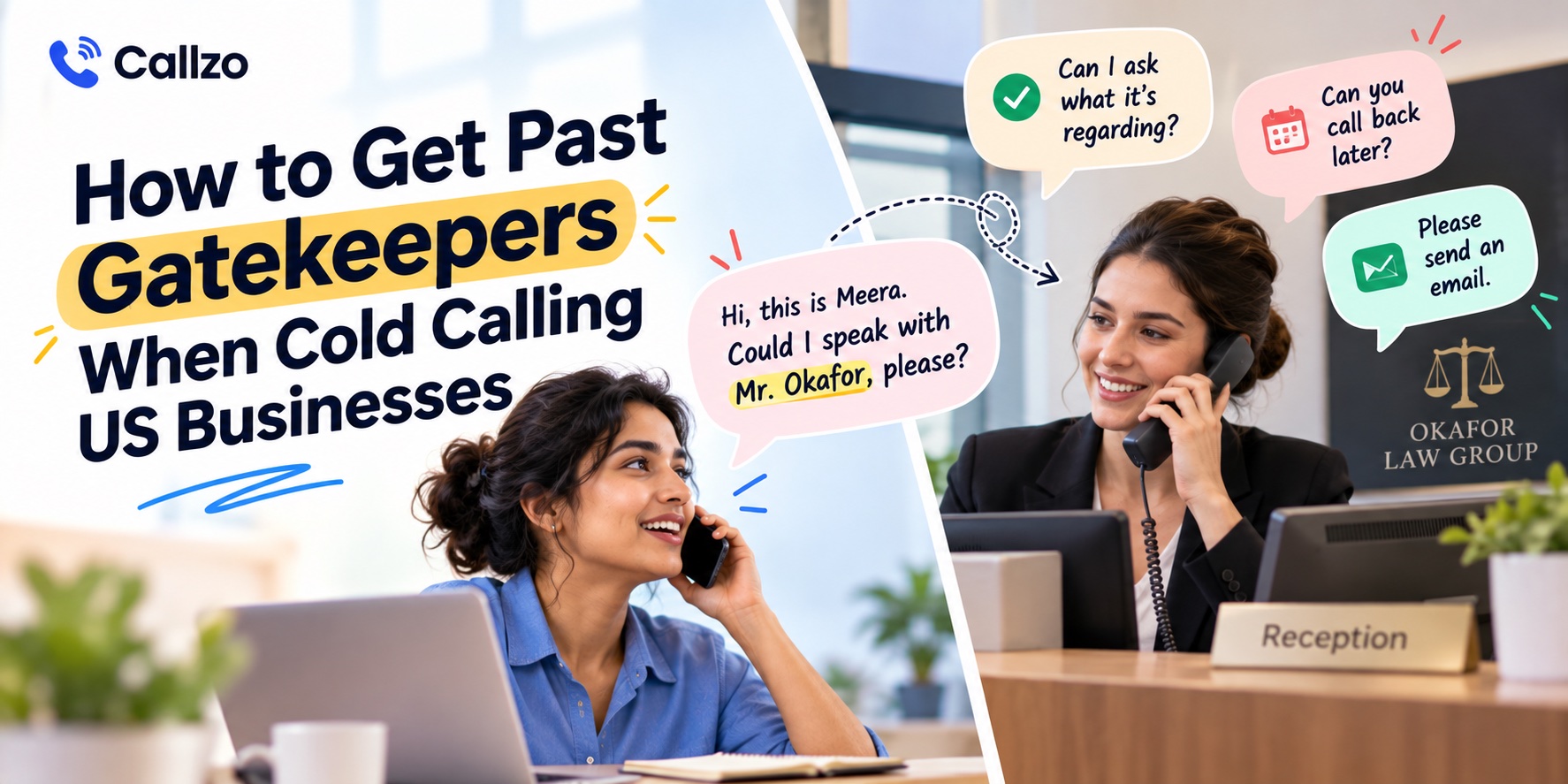
Meera found "Daniel Okafor, Founding Attorney" on the About page. She tries:
"Hi, this is Meera. Could I speak with Mr. Okafor, please?"
A name signals homework in a way "whoever handles marketing" never will. No name online? Google Business profiles and LinkedIn often list one. Failing that, she asks Gloria directly who looks after the website, then thanks her by name.
Give One Honest Reason
"And what's it regarding?" arrives right on schedule. Meera has written her answer on a sticky note:
"His blog hasn't posted since March. I'd like to show him one idea."
Every word is true. Gloria can repeat it without squirming. Compare that with "I'd like to discuss content solutions," which makes everyone's shoulders drop. Specific beats polished. Plain beats clever.
Add a Gentle Opt-Out
Gloria wavers, finger above the hold button. Meera adds:
"No pressure at all. Could you pass along a note?"
Trainers claim "you're free to say no" boosts yeses. A 2023 meta-analysis of 52 experiments found a medium average effect. The seven highest-quality studies showed no clear effect. So Meera says it only when it feels natural. She doesn't count on it.
Should You Email Before Calling?
Sometimes. Meera sends Mr. Okafor's office one short email on Monday: who she is, the stale blog, one line asking for a call. On Tuesday she rings and says, "I sent a note yesterday about the blog." That sentence is true, which is why it works.
Gloria's reply: "Oh, I saw that. Let me see if he's free."
Nothing is guaranteed. Still, the email gives Gloria something concrete to match to a name. Skip this move entirely if you'd have to invent the email.
What Is the Best Time to Reach the Decision-Maker?
Owners are hardest to catch in their own rush hours (our view, not research). A lawyer before court. A restaurateur at lunch.
Meera tries Phoenix at 10:00 a.m., which is 10:30 p.m. in Hyderabad, because Arizona skips daylight saving and the gap stays fixed. Her tea is cold. Her notebook is full. For other zones, our guide to the best time to call US clients from India lays out the math.
What If the Person Isn't Available?
"He's in a deposition until three." Meera doesn't push. She asks when he's usually free. Gloria offers Thursday morning. In goes the note, as firm as a booked appointment. If Gloria takes a message, Meera leaves three things: name, number, one reason. Thursday comes.
She dials at 10:05 a.m. Phoenix time. Gloria laughs. "You're the blog lady." Being remembered, it turns out, is half the battle.
What Should You Never Say to a Gatekeeper?
Late on a slow night, shortcuts start looking tempting. "I'm returning his call" is false if he never called. "It's a personal matter" hides a sales call behind a fib. "He's expecting me" may work once and then poison every call after it.
- "I'm returning his call" (when he never called)
- "It's a personal matter" (when it is a sales call)
- "He's expecting me" (when he is not)
- "Is the decision-maker in?" (the faceless version of the same question)
Asked who you are? Say so. Asked why? Say that as well. Straight answers keep your name clean at a firm you'll ring again.
Meera learned that after one tempting moment on Wednesday, when she nearly said "he's expecting me." She didn't. Thursday's call went better for it.
How Do You Log Gatekeeper Calls?
After each call, Meera adds a line to her Callzo contact notes: Gloria, front desk. Mr. Okafor, owner. Thursdays quieter. Hiring a paralegal.
Callzo's call history also records duration, direction and timestamp (not audio, to be clear). Her next call opens, "Hi Gloria, it's Meera again." True. And warmer for it. Earned familiarity beats the faked kind every time. Her notes make it possible.
| Instead of saying | Try this |
|---|---|
| "He's expecting me" | "Hi, this is [name]. Could I speak with [owner name]?" |
| "I'd like to discuss solutions" | One specific, true observation about their business |
| "Is the decision-maker in?" | The owner's actual name, found before you dial |
| Pushing for an immediate transfer | "No pressure, could you pass along a note?" |
About the Author
Maroosha Nageen
SEO Content Writer
Maroosha writes freelancer outreach and client-acquisition guides for Callzo, focused on practical, honest scripts and systems Indian freelancers can actually run. This piece on getting past receptionists grew out of a simple frustration: most gatekeeper advice teaches bluffing tricks that work once and burn the relationship after. She prefers the slower, honest version that lets you call the same business twice.
Connect on LinkedIn →Frequently Asked Questions
What do you say to the gatekeeper?
Your first name, the owner’s name and one true reason. Meera’s version: "Hi, this is Meera. Could I speak with Mr. Okafor? His blog hasn’t posted since March. I have one idea for him." Then stop talking and let Gloria answer.
What is the secret to getting past gatekeepers?
There isn’t one. That’s the point. Be useful, be brief and be honest. Meera’s best result came from asking Gloria a question: "When’s the best time to catch him?" Gatekeepers like being asked for help. They dislike being tricked.
Is B2B cold calling illegal?
Not automatically. B2B isn’t exempt from everything, though. The FTC’s 2024 amendment extended its misrepresentation ban to B2B calls. Canada’s CRTC exempts companies that only call businesses from National Do Not Call List rules, though exempt telemarketers still keep an internal do-not-call list. Rules vary. We’re no lawyers. Check current guidance.
How do you get over the anxiety of cold calling?
Make the first call small and the script short. Meera rehearsed her sticky note twice, then dialed. Her hands shook through call one. By call six, they didn’t. Log what happens, because a notebook full of ordinary outcomes quiets a lot of dread.
Related Posts
Cold Calling
Best Cold Calling Opening Lines for Freelancers
What to say in the first ten seconds, once you're through to the owner.
Cold Calling
How to Handle Cold Calling Objections (as a Freelancer)
Scripts for "we're not interested" and every other brush-off.
Lead Generation
How to Find Qualified US Business Leads for Cold Calling
Build a list worth calling before you worry about who answers.
Compliance
Is It Legal to Cold Call US Businesses From India?
What the FTC and TCPA actually say before you dial.
Meera's story is made up. The pattern isn't. Visit Callzo and make your first five gatekeeper calls.
Ready for Your Next Gatekeeper Call?
Call from a dedicated US number in your browser, keep contact notes on every gatekeeper, and let callbacks reach you right there.
Try Callzo